


Bun Thang in the Old Quarter: Origins and Famous Spots
Bun thang in the Old Quarter is a noodle dish in a clear chicken-bone broth, topped with an array of finely shredded ingredients, chicken, Vietnamese pork roll, thin egg strips, dried radish, and dried shiitake mushroom.
If bun oc is the Old Quarter's humble street treat, bun thang occupies an entirely different place, more refined, more painstaking, almost a work of art presented in a bowl. Every strand of egg, pork roll, and chicken is sliced impossibly thin and even, arranged side by side like a multicolored painting, before being finished with a ladle of crystal-clear broth.
What is bun thang in the Old Quarter, and what makes it special?
Bun thang is a noodle dish in a clear, delicately sweet broth simmered from chicken bones, sometimes with pork bones or dried shrimp added for extra depth. What makes this dish special isn't any single standout ingredient, but the meticulous combination of a great many small components. By some estimates, an authentic bowl of bun thang requires at least around 20 different ingredients, from shredded chicken and pale pink strips of Vietnamese pork roll to paper-thin egg strips, golden crispy chicken skin, dried shiitake mushroom, dried radish, spring onion, Vietnamese coriander, and a touch of aromatic fermented shrimp paste.
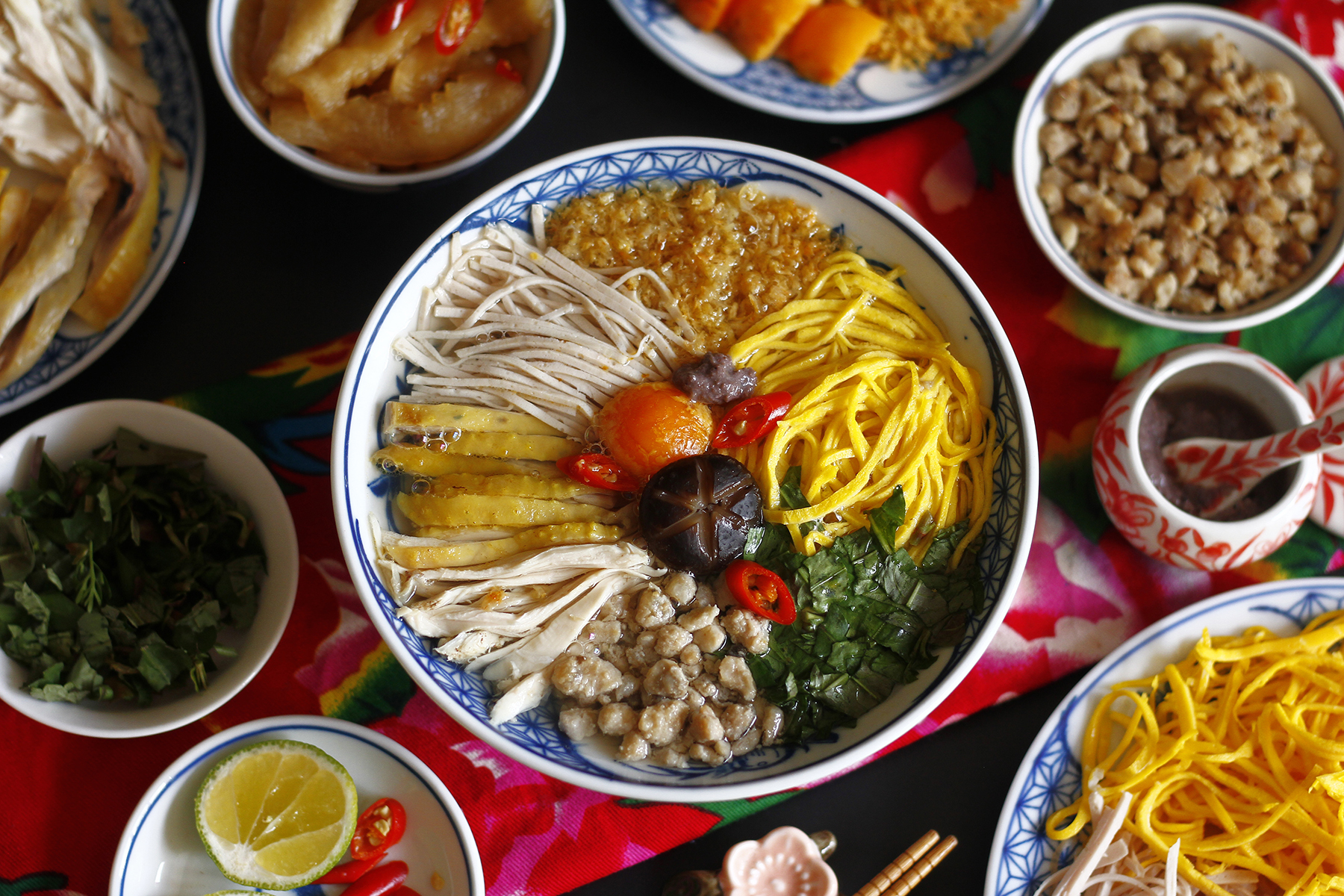
People often say enjoying bun thang engages more than just taste, it involves color, aroma, flavor, and even sound. A beautiful bowl of bun thang should bring together a full palette of color: golden chicken, delicate pale egg strips, blush-pink pork roll, and a few slices of orange-red salted egg yolk like rays of sunlight, as VnExpress once described it. And when you bite into a piece of dried radish, the satisfying crunch is an inseparable part of the experience.
Few people know that bun thang, alongside a rolled shrimp dish, was once one of the two main dishes in the traditional "hoa vang" offering meal of old Hanoi, the ceremonial send-off meal for ancestors after the Tet holidays. Born from making good use of leftover Tet ingredients, boiled chicken, pork roll, eggs, this dish reflects the resourcefulness of Hanoi's women of earlier generations, turning leftovers into one of the most refined dishes in the city's cuisine.
Because of this family heritage, each old Hanoi household traditionally kept its own bun thang recipe, rarely shared outside the family and passed down only to its own children and grandchildren. That's why, even today, though every restaurant calls it bun thang, the flavor at each spot and each family still carries its own subtle differences, shaped by secrets preserved across generations.
The origin of Hanoi's bun thang: why this name?
As for the name "bun thang," there are actually several different explanations rather than just one. The most common interpretation ties the word "thang" to a traditional herbal medicine prescription, which likewise combines many small ingredients in precise proportions, much like the dozens of small components carefully combined in a bowl of this noodle soup. Another view holds that it's a variation on "dan hoa thang," a dish from old royal court cuisine, while a simpler explanation suggests "thang" here simply means broth or soup, referring to the dish's liquid component.
Whichever explanation holds, the dish is deeply tied to old Hanoi tradition, especially around Lunar New Year. After days of rich, fatty holiday feasting, Hanoians traditionally cooked a pot of bun thang around the fourth day of Tet, both to make use of leftover chicken and pork roll from the holiday spread, and to help the whole family recover from days of heavy eating. Today, while it no longer carries quite the same elaborate ceremony it once did, bun thang remains a beloved dish for many Hanoians year-round, not just during Tet.
How bun thang is made: precision down to the last detail
A bowl of bun thang may look light and delicate, but behind it lies a preparation process that takes hours and a level of meticulous care few dishes can match.
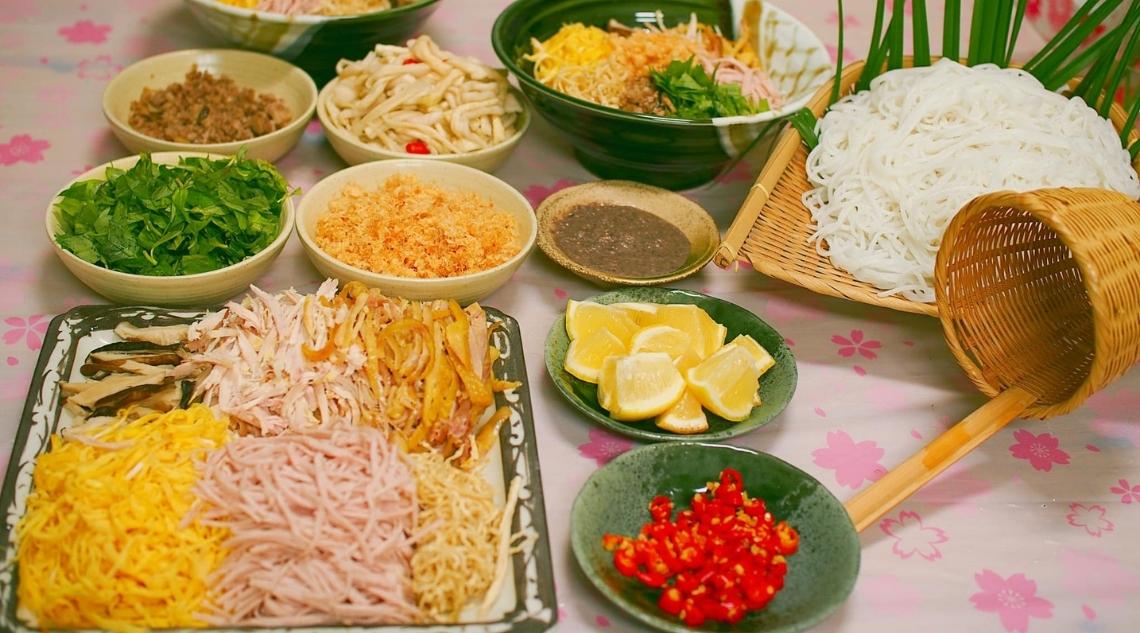
Once boiled, the chicken is immediately plunged into an ice bath so the skin tightens and turns crisp, before being deboned, with the breast meat shredded into fine strips and the skin sliced as thin as noodle strands. The chicken and pork bones are blanched in boiling water to remove any odor, then simmered together for about an hour before dried shrimp and lightly toasted dried squid, wrapped in a filter bag, are added, simmering for another hour with charred shallots and ginger so the broth develops its signature aroma while staying perfectly clear.
Each topping in the bowl is also prepared entirely separately to preserve its own color and flavor. Eggs are beaten with a touch of salt and fried into thin layers in the pan, then sliced into fine, even strips. For diners who appreciate the old-school way, an authentic bowl of bun thang is sometimes finished with a few drops of ca cuong essence, a rare and increasingly hard-to-find flavoring, where just a touch is enough to elevate the whole dish. Given how many steps this requires, it's easy to understand why many old Hanoi families only made bun thang on special occasions, rather than as often as other noodle dishes.
Where to find the best, most famous bun thang in the Old Quarter
If you'd like to try this refined dish, these three addresses are the names most often mentioned around the Old Quarter.
Bun Thang Ba Duc, 48 Cau Go, Hang Bac ward. This is the most well-known bun thang spot in the area, with more than 30 years of history. What's notable is that it only opens in the evening, roughly from 4pm to 10pm, and is busiest between 6 and 7pm. The restaurant sells around 500 bowls a day, which can climb to 800 on weekends or holidays, according to Mytour. Reference prices span a fairly wide range, from around 42,000 to 135,000 VND depending on extras like young egg or chicken offal.
Bun Thang Ba Am, 16 Lan Ong. Among Hanoi's serious food lovers, there's a saying that if you haven't eaten bun thang at Ba Am's, you can't really say you understand Hanoi. The restaurant has passed through several generations while keeping its traditional flavor intact, and beyond bun thang, it also serves a handful of other Hanoi dishes.
Bun Thang Hang Trong, 22 Hang Trong. This address stands out for sitting right on Hang Trong Street, just a few steps from The Haron. The bowl here comes fully loaded, pork roll, thin egg strips, shredded chicken, radish, Vietnamese coriander, and mushroom, ladled with a light, delicate broth. Compared with the general price level around the Old Quarter, around 25,000 VND a bowl is considered quite reasonable.
How much does Old Quarter bun thang cost?
Prices for a bowl of bun thang in the Old Quarter vary quite noticeably between restaurants, from around 25,000 VND at more modest spots to 135,000 VND at well-known restaurants offering premium toppings like young egg or chicken offal. Much of this difference comes down to the elaborateness of the ingredients, the restaurant's long-standing reputation, and its location right in the heart of the tourist district.
If you simply want to try the authentic flavor of bun thang without worrying much about ambiance or reputation, the more modest spots at 25,000 to 40,000 VND already deliver a complete experience. If you'd rather enjoy the full range of toppings and don't mind paying a bit more for reputation, a restaurant like Bun Thang Ba Duc is well worth considering.
How to enjoy bun thang the right way
To get the fullest experience from a bowl of bun thang, a few things are worth keeping in mind:
Don't stir it right away: take a moment to admire the colorful, carefully arranged toppings before mixing, it's part of the experience of this dish.
Add fermented shrimp paste sparingly: just a touch is enough to bring out its signature aroma, too much will overpower the broth's delicate flavor.
Pair it with fresh Vietnamese coriander: its faint sharpness helps balance the richness of the egg and pork roll, don't skip this small but important ingredient.
Enjoy it while it's hot: bun thang's broth tastes best piping hot, once it cools, it loses much of its aroma and the delicate sweetness drawn from the chicken bones.
Where to rest near the bun thang area in the Old Quarter
All three restaurants above sit within a short walk of Hoan Kiem Lake, making it easy to pair a food outing with a stroll through the Old Quarter. Notably, Bun Thang Hang Trong sits on the very same street as The Haron Hanoi Boutique at 39 Hang Trong, just a few steps away.
After enjoying a refined bowl of bun thang, you can head back to rest in a quiet, private space nearby. If you'd like to explore more of the Old Quarter's food scene, an article on what to see and eat in Hanoi's Old Quarter can offer plenty more suggestions.
See our room types at The Haron if you need a place to stay right near this area.
FAQ: Frequently Asked Questions
Why is it called bun thang? The name comes from an association with a traditional herbal medicine prescription, made up of many small ingredients combined in precise proportions, much like how a bowl of bun thang is built from dozens of small components.
What ingredients go into bun thang? An authentic bowl of bun thang typically includes around 20 ingredients, mainly shredded chicken, thinly sliced pork roll, thin egg strips, chicken skin, dried shiitake mushroom, dried radish, spring onion, Vietnamese coriander, and a touch of fermented shrimp paste, all ladled with a chicken-bone broth.
Which bun thang restaurant is the most famous in the Old Quarter? Bun Thang Ba Duc at 48 Cau Go is the most frequently mentioned, thanks to more than 30 years of history and consistently packed evenings. Bun Thang Ba Am on Lan Ong Street and Bun Thang Hang Trong are also two well-loved addresses.
How much does a bowl of bun thang cost? Prices vary quite a bit, from around 25,000 VND at more modest spots to 135,000 VND at well-known restaurants offering the full range of premium toppings.
In short
Bun thang is a refined dish of old Hanoi, its name tied to traditional herbal medicine prescriptions for the dozens of small ingredients meticulously combined within it. The three spots most worth trying are Bun Thang Ba Duc, Bun Thang Ba Am, and Bun Thang Hang Trong, with reference prices from 25,000 to 135,000 VND a bowl.
Bun Thang Hang Trong sits on the very same street as The Haron, making it easy to pair a refined meal with a stay right in the heart of the Old Quarter. Looking for a place to stay near the Old Quarter's food scene? Reach out via hotline +84 24 3209 1666, or visit The Haron Hanoi Boutique at 39 Hang Trong, Hoan Kiem, Hanoi.