


Hanoi Old Quarter Guide: Everything You Need to Know
"What's actually in the Old Quarter that everyone visiting Hanoi has to see?" It's a question nearly every first time visitor to the capital ends up asking. As it turns out, the answer isn't found in any single landmark, but in the way 76 small streets coexist: a century old silver shop standing beside a modern cafe, morning street vendor calls blending into music from a bar by night.
This guide Hanoi Old Quarter Guide walks you through every layer of that neighbourhood, from location and history to what's worth seeing, eating and doing, with a concrete itinerary so you don't miss a thing, even if you only have one day.
Hanoi Old Quarter Guide: location and what makes it special
Hanoi's Old Quarter is a historic urban district located in Hoan Kiem Ward, Hanoi, an administrative unit newly established on 1 July 2025 through the merger of Hang Bac, Hang Bo, Hang Buom, Hang Dao, Hang Gai, Hang Ma, Ly Thai To wards along with parts of neighbouring wards, according to the Government Portal of Vietnam. In tourism terms, the Old Quarter's boundaries are defined as follows: Hang Dau Street to the north, Phung Hung Street to the west, Hang Bong, Hang Gai, Cau Go and Hang Thung streets to the south, and Tran Quang Khai and Tran Nhat Duat streets to the east. The area covers roughly 100 hectares across 76 streets, just about 3 kilometres from central Hanoi.
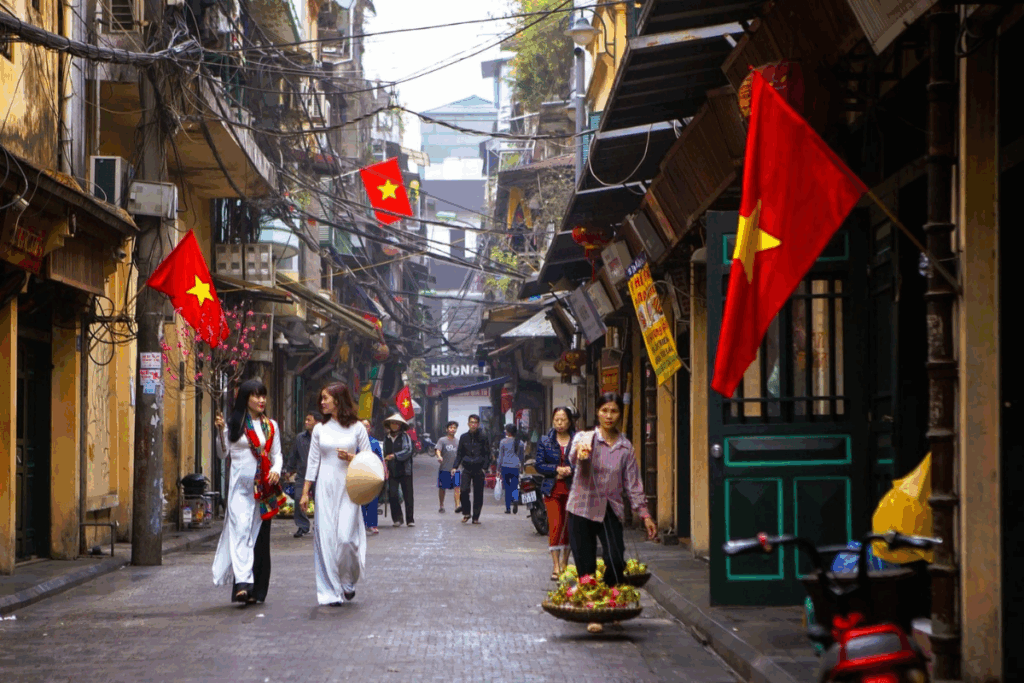
Here's a detail worth knowing: the familiar name "Hanoi's 36 Old Streets" is actually a symbolic figure of speech representing the richness of the area, rather than a literal count of exactly 36 streets. What makes this place special isn't the number of streets, but the fact that each one was once tied to its own trade, a legacy still visible in the many street names beginning with "Hang" (meaning "shop" or "goods"). Over the centuries, the Old Quarter has also been a place of cultural exchange, home to a Chinese community that settled from the Le dynasty onward, followed by French and Indian traders during the colonial period, all of whom left their mark on the area's architecture and daily life.
Here's a quick reference table before we dive into the details.
Information | Detail |
|---|---|
Administrative location | Hoan Kiem Ward, Hanoi |
Area | About 100 hectares |
Scale | 76 streets |
Boundaries | North: Hang Dau · West: Phung Hung · South: Hang Bong, Hang Gai, Cau Go, Hang Thung · East: Tran Quang Khai, Tran Nhat Duat |
Alternative name | "Hanoi's 36 Old Streets" (a figure of speech, not a literal count) |
Recommended time | At least 1 day; 2 to 3 days for a fuller experience |
Every corner of the Old Quarter tells the story of an old trade
Wander through the Old Quarter and you'll quickly notice a distinctive naming pattern: most streets begin with "Hang," followed by the name of the goods once sold there. Hang Bac Street was once home to silversmiths, Hang Buom was tied to the sail making trade before later becoming a street of sweets, Hang Ma specialised in ceremonial and votive paper goods, and Hang Trong gave birth to the famous folk painting style that shares its name. Some streets still practise their original trade, others have shifted entirely over time, but the names remain, standing as quiet markers of memory.
Tucked between these trade streets are cultural and spiritual sites easy to overlook if you're not paying attention: Hang Bac Communal House, Bach Ma Temple on Hang Buom Street, dedicated to the guardian spirit of the eastern gate of the ancient Thang Long citadel, and Ba Da Pagoda, quietly nestled amid the bustle. Each structure is a small slice of history, existing quietly alongside modern life.
What is there to see and do in Hanoi's Old Quarter?
In short, the Old Quarter offers three main layers of experience: historic sites, street art spaces, and vibrant nightlife.
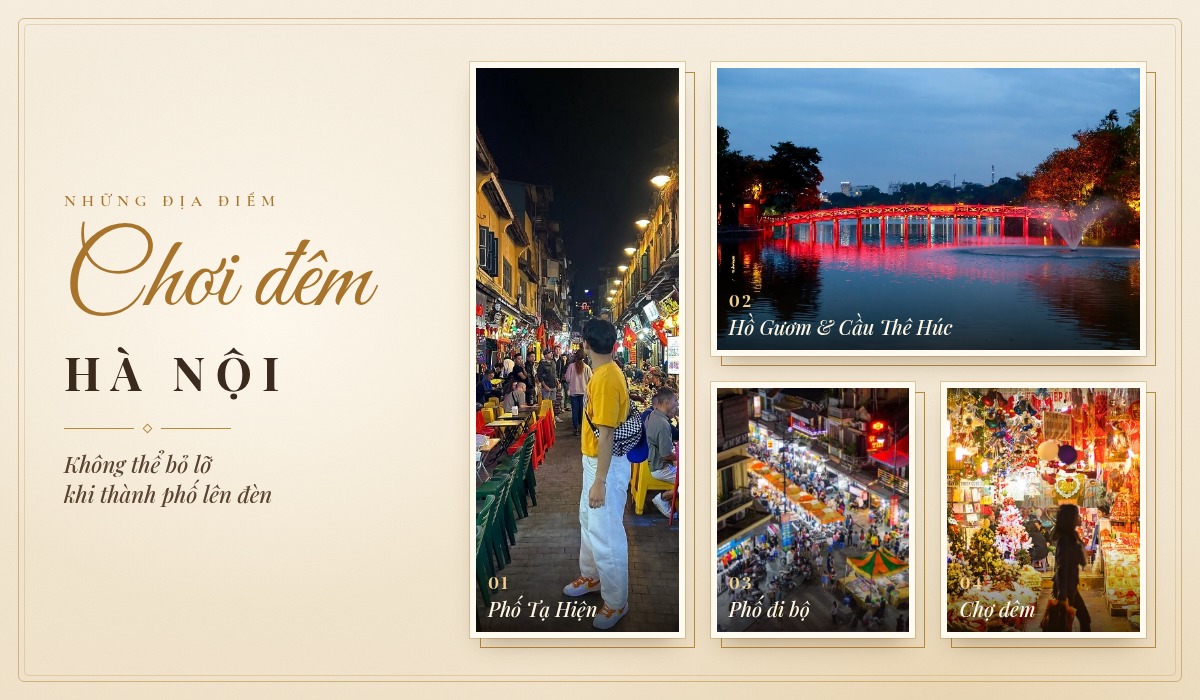
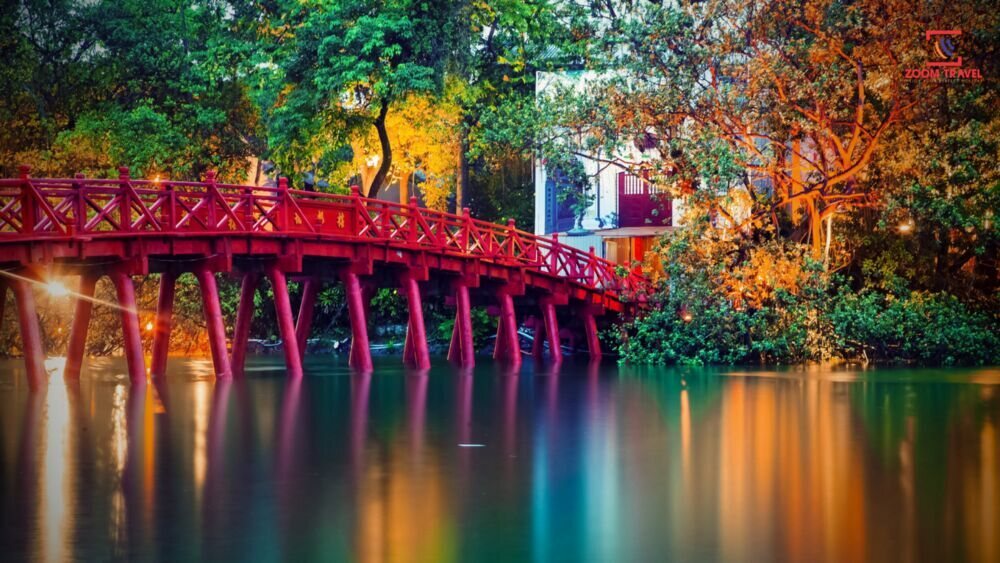
Among the historic sites, Hoan Kiem Lake and Ngoc Son Temple are the classic starting point. The red lacquered The Huc Bridge arching over the green lake water has become something of a visual icon for Hanoi itself. Not far away is O Quan Chuong Gate, the only one of the ancient gates surrounding the old Thang Long citadel to survive intact, built in 1749 and standing through multiple restorations across more than two centuries. These are both classic frames for photography enthusiasts, and if you want to know exactly where to stand and at what time of day for the best light, our guide to the best photo spots in Hanoi's Old Quarter covers each location in detail.
Not far from the centre, Phung Hung Street offers an entirely different character: nearly 20 murals painted beneath old railway arches, recreating scenes from Hanoi decades past, from public water pumps of the subsidy era to the lantern lit glow of Hang Ma Street during Mid Autumn Festival.
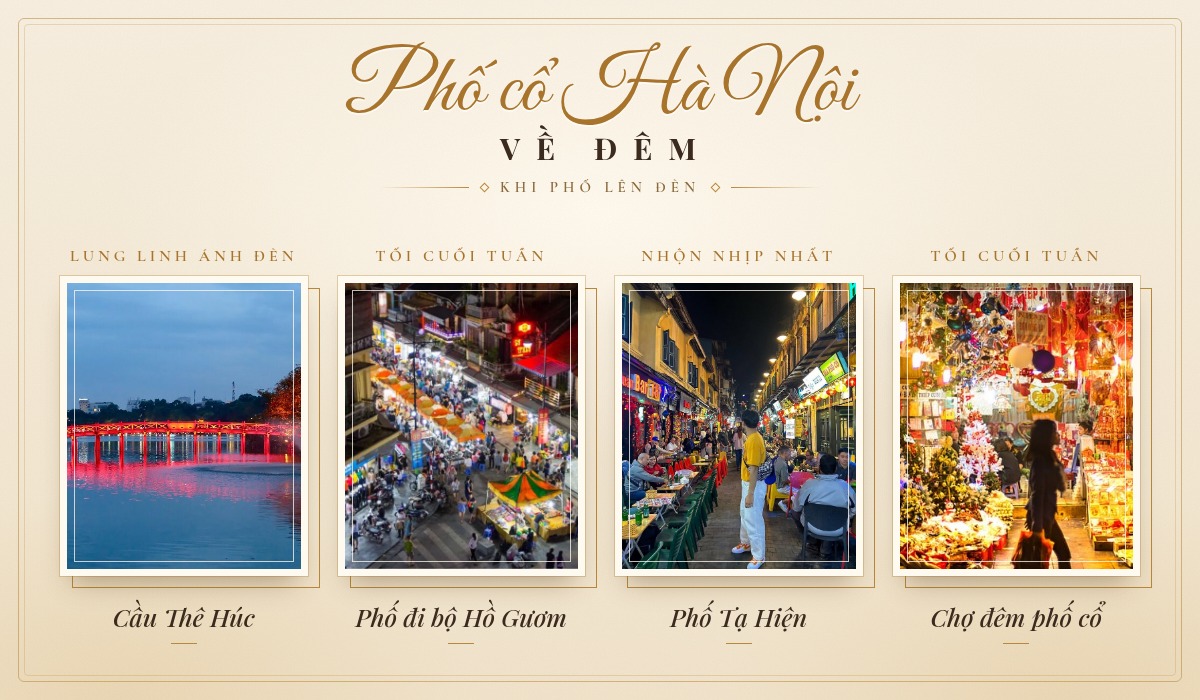
By night, the Old Quarter shifts into a different rhythm entirely. Dong Xuan night market runs on Friday, Saturday and Sunday evenings, while the pedestrian street around Hoan Kiem Lake lights up all weekend with street performances and traditional games. For a fuller evening itinerary, including some lesser known corners, our guide to Hanoi's best nightlife spots rounds up ten locations with specific hours.
What is there to eat in Hanoi's Old Quarter?
Food is one of the biggest reasons people can wander the Old Quarter all day without ever getting bored, since each meal of the day here comes with its own dish.
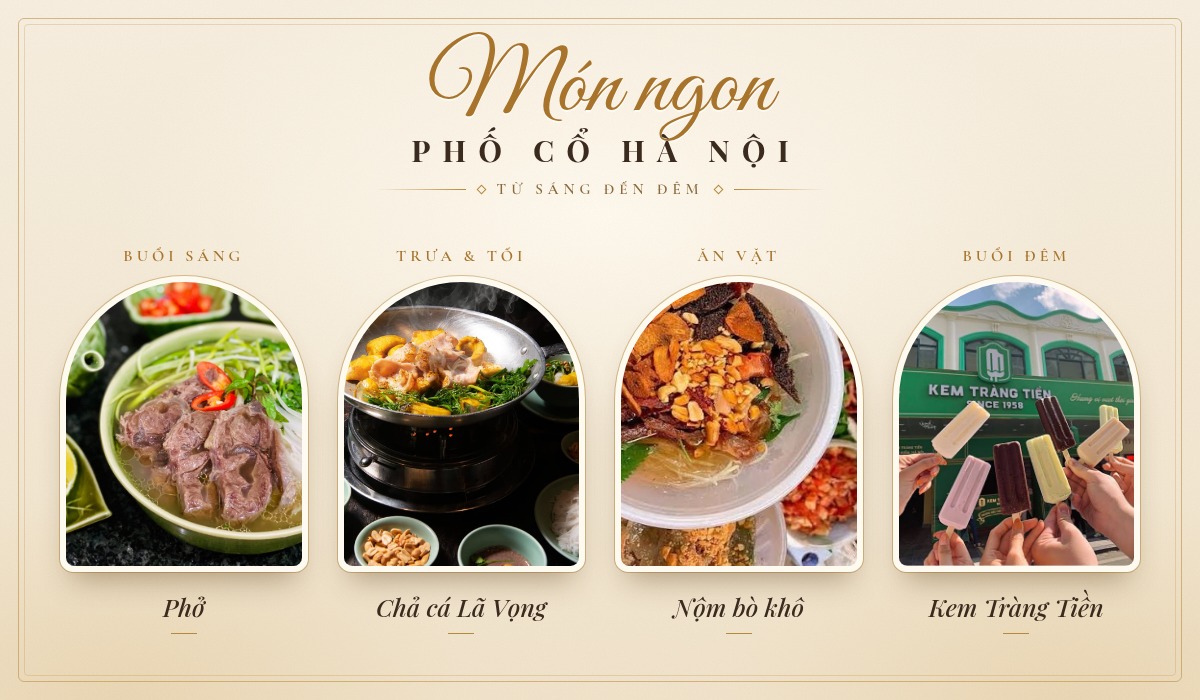
Mornings usually start with a steaming bowl of pho. Pho Bat Dan is one of the oldest addresses in the area, still keeping its distinctive self service tradition and a clear, deeply flavoured broth from hours of simmered bones. By midday, bun cha takes centre stage: charcoal grilled pork dipped in sweet and sour fish sauce, served with loose rice vermicelli and fresh herbs. This is the dish that caught the world's attention when former US President Barack Obama sat down with the late chef Anthony Bourdain on small plastic stools in the heart of Hanoi in 2016. Right here in the Old Quarter, Bun Cha Hang Quat still keeps that same rustic, traditional flavour alive.
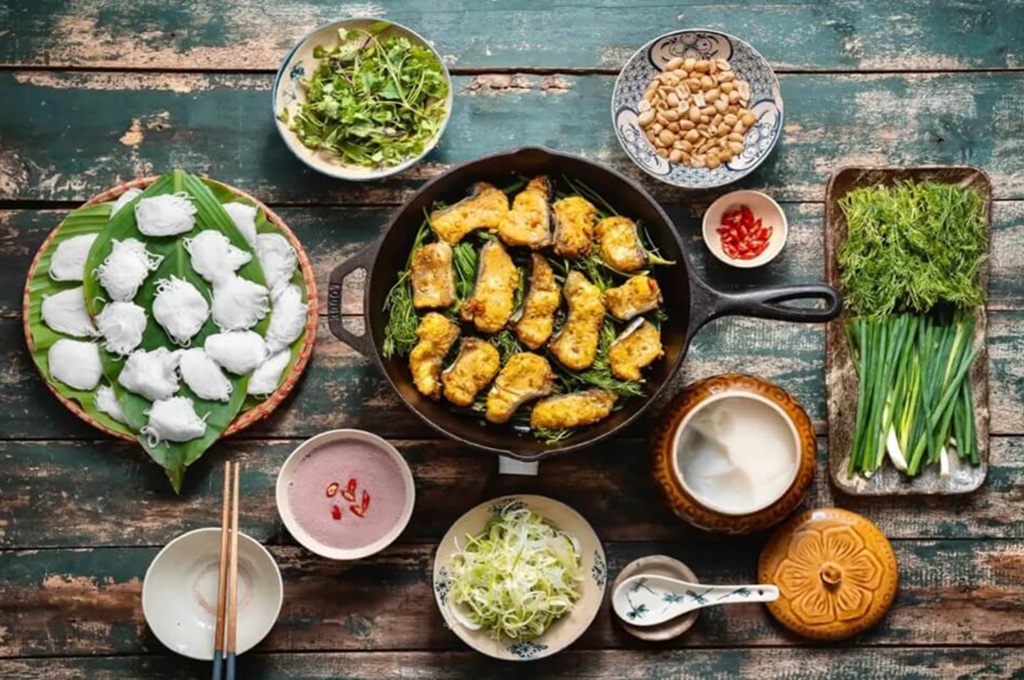
Come evening, Cha Ca La Vong is a name you can't skip, a dish over a century old, so famous that the very street where it was born now bears its name, Cha Ca Street. Fish marinated in turmeric and dill is fried golden right at the table, served with vermicelli, roasted peanuts and shrimp paste, part meal, part small theatrical performance in front of the diner.
Between main meals come countless street snacks: soft steamed rice rolls filled with meat, crispy fried spring rolls served with pickled vegetables, or simply a fragrant packet of young green rice sold by street vendors. And of course, no visit is complete without egg coffee, a drink born in 1946, with a rich egg cream layer floating atop bold coffee, alongside bia hoi, a light, fresh beer brewed and drunk the same day for around 10,000 VND a glass, long an inseparable part of Hanoi's street culture.
If you're drawn to slow mornings with a cup of coffee by a window overlooking the street, our guide to the best cafes in Hanoi's Old Quarter is worth a look. And if you'd rather soak up the lively buzz of a proper Hanoi beer hall evening, our guide to the best beer halls in Hanoi's Old Quarter rounds up the addresses seasoned local drinkers recommend most.
Where should you stay while exploring Hanoi's Old Quarter?
Choosing the right place to stay can completely change how you experience the Old Quarter. Staying right in the centre means you can catch the sunrise over Hoan Kiem Lake, rest nearby at midday, and still make it out to the night market without travelling far.
Because the area is fairly compact and largely made up of traditional tube houses, accommodation in the Old Quarter varies widely, from budget homestays and hostels tucked into alleyways, to small boutique hotels with a few dozen rooms, all the way to larger four and five star hotels facing the main streets around the lake. Notably, tucked among those tightly packed rows of tube houses are a number of small boutique hotels focused on design and personalised experience, a world away from the usual image of a budget guesthouse or an industrial scale hotel.

One name worth noting in this space is The Haron Hanoi Boutique at 39 Hang Trong, a storefront on an art street just a few minutes' walk from Hoan Kiem Lake and Ngoc Son Temple. The interiors here blend Old Hollywood glamour with Indochine style: warm terracotta tones, golden lighting, and a collection of cinematic black and white photography throughout the rooms.
The hotel's Suite with Balcony offers a private balcony looking straight out over the street, while the Premium Suite with Garden features a rare private garden right in the heart of the Old Quarter, alongside a Rooftop Bar for winding down the day with a drink up high.
If you'd like to compare more boutique options in the area, our guide to boutique style hotels in the Old Quarter is a useful reference. Whichever you choose, keep a few things in mind before booking: soundproofing (tube houses sit close together, so noise can travel), whether there's a lift (many older buildings only have stairs), and the actual walking distance to Hoan Kiem Lake, since "near the Old Quarter" on a map can sometimes still mean a few streets' walk to the centre.
A one day itinerary for Hanoi's Old Quarter
If you only have one day, here's how to structure it to experience nearly everything the Old Quarter has to offer:
Early morning (6am to 8am): stroll around Hoan Kiem Lake while the streets are still quiet, stop by Ngoc Son Temple, and grab a few photos at the nearby trade streets.
Mid morning (8am to 11am): explore the distinctive "Hang" streets, visit O Quan Chuong Gate or the Phung Hung murals, and pause for a cup of egg coffee.
Midday (11am to 1pm): enjoy Old Quarter cuisine, then head back to your hotel to rest and avoid the midday heat.
Afternoon (2pm to 5pm): browse the shopping streets, and stop at a cafe with a good view to watch the street lights come on.
Evening (from 6pm onward): dive into the beer hall atmosphere, or if it's the weekend, visit Dong Xuan night market and close out the day with a drink at a rooftop bar.
Tips for visiting Hanoi's Old Quarter for the first time
A few practical tips to help your trip go smoothly:
Get around mostly on foot. The Old Quarter has many narrow alleys, one way streets, and frequent congestion, so walking or cycling is the most effective way to explore. If you're driving a motorbike or car, park at one of the designated spots around Hoan Kiem Lake.
Time your visit well. Early mornings and late afternoons tend to be cooler and quieter, while weekends are livelier thanks to the night market and pedestrian street, but also considerably more crowded than weekdays.
Wear comfortable clothing and shoes. You'll be doing plenty of walking on pavements that aren't always perfectly flat.
Keep an eye on your belongings. Especially in crowded areas like the night market and pedestrian street.
Give yourself enough time. One day is enough to skim the highlights, but if you want to soak in the neighbourhood's rhythm properly, 2 to 3 days will make for a far more relaxed experience.
FAQ
What is Hanoi's Old Quarter best known for? Its biggest draws are the mix of historic sites (Hoan Kiem Lake, Ngoc Son Temple, O Quan Chuong Gate), century old trade street architecture, and a lively food and nightlife scene right in the heart of the capital.
What are Hanoi's "36 Old Streets"? "36 Old Streets" is a symbolic figure of speech, not a fixed list of exactly 36 streets. In reality, the Old Quarter today has 76 streets, most named "Hang" after traditional trades such as Hang Bac, Hang Dao, Hang Ma and Hang Buom.
How long do you need to see Hanoi's Old Quarter? One day is enough to see the main highlights and get a feel for the area. If you want to explore every corner, sample a wider range of food, and experience both day and night, 2 to 3 days will feel far more complete.
Is Hanoi's Old Quarter far from Hoan Kiem Lake? No, Hoan Kiem Lake is essentially the centre and southern boundary of the Old Quarter, so nearly every sight, restaurant and hotel mentioned in this guide sits within just a few minutes' walk of the lake.
In short
Hanoi's Old Quarter sits in Hoan Kiem Ward, covering about 100 hectares across 76 streets, just roughly 3 kilometres from the city centre. There's enough here to fill a full day of sightseeing, eating and exploring: historic sites, trade streets, a wide range of food, and a weekend night market. Staying right in the area, such as at The Haron (39 Hang Trong), lets you make the most of your time without the hassle of travelling far.
After a long day wandering from corner to corner, sometimes all you need is a place to sit down, sip a cup of tea, and reflect on everything you've just experienced.
The Haron Hanoi Boutique, 39 Hang Trong Street, Hoan Kiem, Hanoi, is always ready to be that stop.
Call +84 24 3209 1666 whenever you need more information.