


Cha Ca La Vong: Hanoi's Famous 150-Year-Old Grilled Fish
Cha ca la vong is a dish of catfish marinated in galangal and turmeric, first created in 1871 by the Doan family at 14 Cha Ca Street in Hanoi's Old Quarter, Hoan Kiem. The fish is seasoned, grilled over charcoal, then pan-fried again right at the table with dill, served with rice vermicelli, roasted peanuts, and fermented shrimp paste. Reference price runs roughly 350,000 to 500,000 VND per serving.
The sound of oil sizzling in a cast-iron pan set right on the table, the smell of dill and spring onion rising together with charcoal smoke, this is a sound and a flavor that has lived for more than a century and a half in the heart of Hanoi's Old Quarter. Few dishes can claim that the very street where they were born was renamed after them, and Cha Ca La Vong is one of those rare cases.
What is cha ca la vong, and what makes it special?
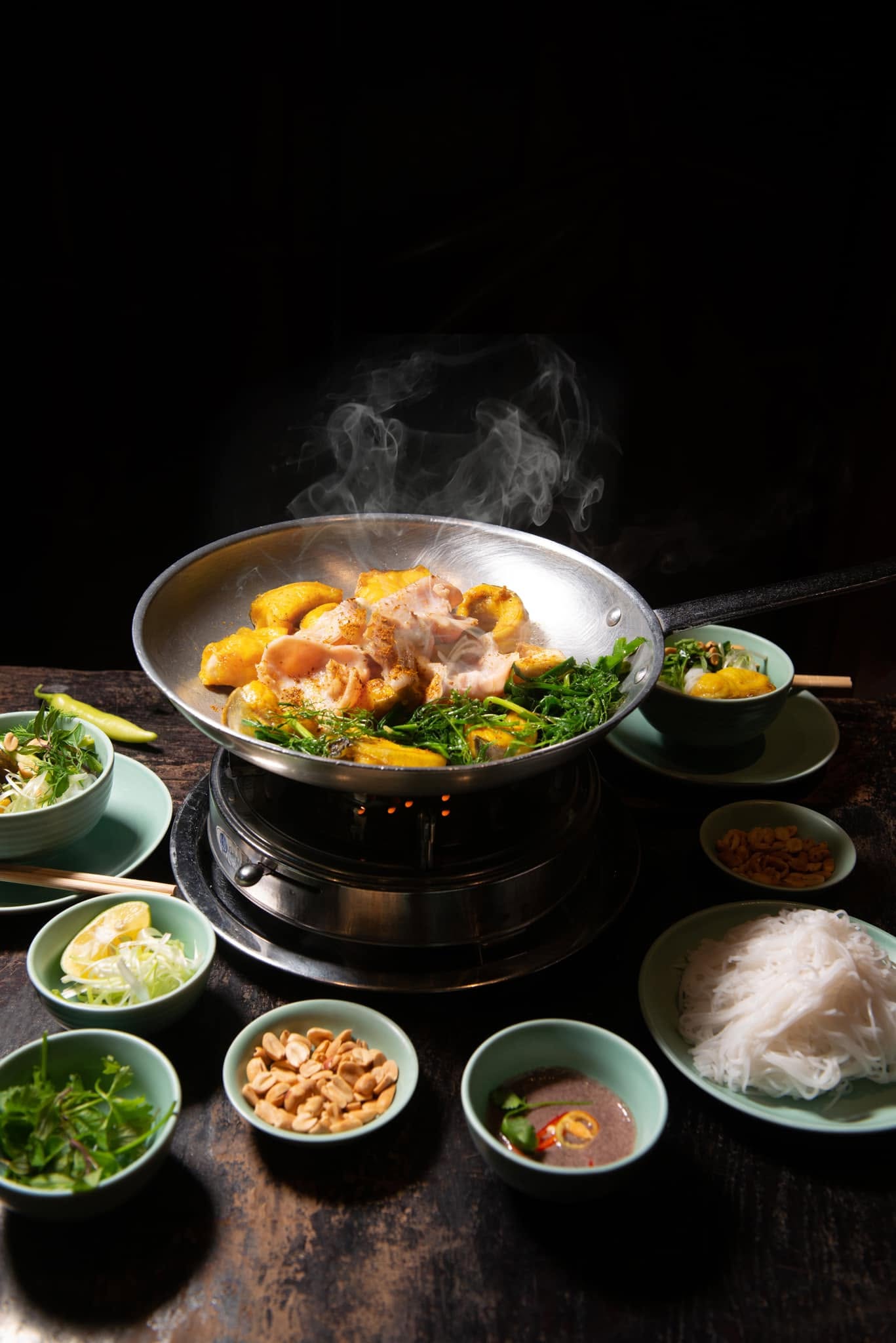
Cha Ca La Vong is fish sliced into pieces, marinated, grilled over charcoal, then pan-fried a second time right at the table with dill and spring onion. What sets this dish apart from ordinary grilled fish dishes is the way it's served: diners don't just eat, they watch the fish sizzle in hot oil right in front of them, filling the air with its aroma before the first bite.
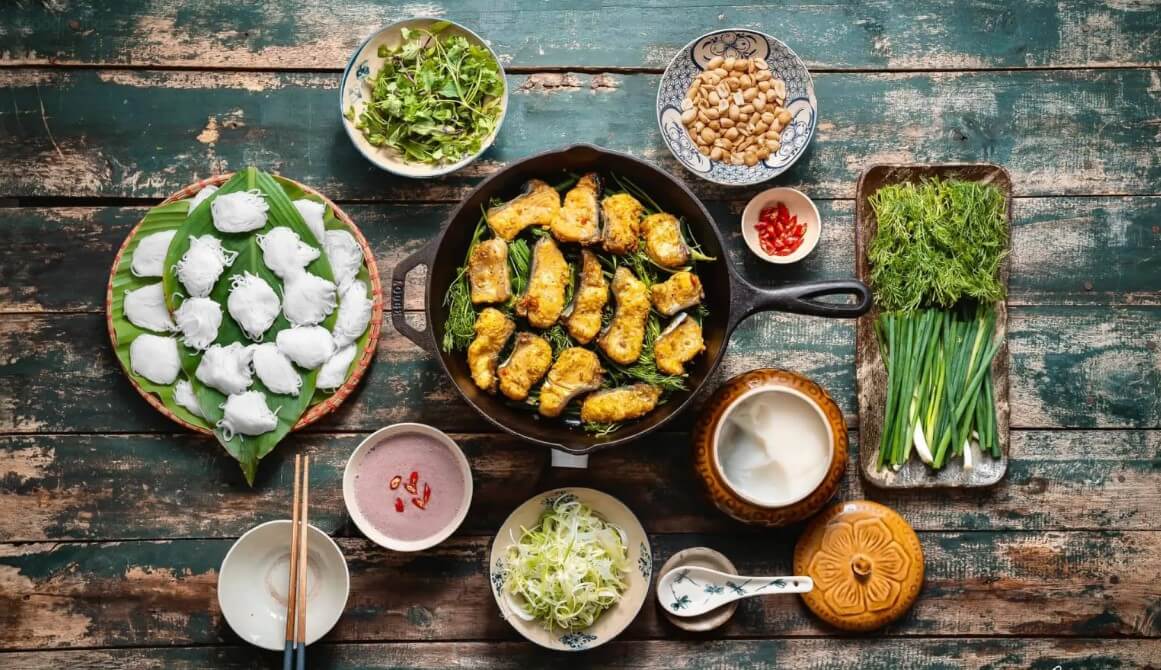
One detail few people notice is that the menu at the original restaurant has only ever had three items: the main dish of cha ca, one side dish, and one dessert, with none of the long menus typical of ordinary restaurants. That extreme simplicity is exactly what defines its identity, a brand that has lasted more than 150 years built entirely around a single dish perfected to the last detail.
Detail | Information |
|---|---|
Founded | 1871, by the Doan family, now in its 5th generation |
Original address | 14 Cha Ca Street, Hoan Kiem (formerly Hang Son Street) |
Origin of the name | A statue of La Vong (Khuong Tu Nha) fishing, placed in front of the shop |
Main ingredient | Catfish, historically the rare Anh Vu fish |
Preparation | Marinated in galangal, turmeric, fermented rice, and fish sauce for about 2 hours, grilled over charcoal, then pan-fried at the table |
Served with | Loose rice vermicelli, roasted peanuts, dill, spring onion, fermented shrimp paste |
Reference price | 350,000 to 500,000 VND per serving |
Opening hours | Roughly 11:00-14:00 and 17:00-21:00 |
The origin of Cha Ca La Vong: why this name?
The story begins during the French colonial period, at house number 14 on Hang Son Street, today's Cha Ca Street. The Doan family was already known for their skill at making cha ca, and they placed a statue of La Vong, or Khuong Tu Nha, in front of their door. He's a well-known figure from Chinese history, depicted sitting patiently fishing with a straight hook, a symbol of a talented man waiting for his moment. Over time, regular customers came to call the shop "cha ca La Vong," and the name has stayed with the dish ever since, according to VnExpress.
The dish's influence grew so strong that residents gradually renamed the entire Hang Son Street to Cha Ca Street, a name that remains official to this day. Another interesting detail is that the original ingredient wasn't today's catfish, but Anh Vu fish, a rare fish once presented to kings, found at the confluence of rivers near Viet Tri, Phu Tho. Because this fish is seasonal and increasingly scarce, cooks gradually switched to catfish, which is easier to source while still offering the sweet, low-bone flesh the dish needs.
The Doan family's restaurant has passed through five generations, lasting over a century and a half to become a name widely known both in Vietnam and abroad, a rare example of a street dish's staying power in modern Hanoi.
How Cha Ca La Vong is made: the craft behind a dish that looks simple
At first glance, it's just a pan of fish frying on a tabletop burner, but achieving the authentic flavor of cha ca requires a multi-step process passed down through generations of families in the trade.
Selecting and prepping the fish: fresh catfish is carefully deboned, keeping only the lean meat along both sides, then sliced into pieces thin enough to absorb the marinade but thick enough not to fall apart when grilled.
Marinating: the fish is seasoned with pounded galangal, fresh turmeric, fermented rice, good fish sauce, and pepper, in proportions passed down within each family. The minimum marinating time is around 2 hours, though many places let the fish sit overnight for the deepest flavor.
First grill over charcoal: the fish is skewered on bamboo sticks and grilled over glowing charcoal, requiring constant attention to the heat so both sides cook evenly golden without burning or staying raw inside. This step largely determines the dish's final flavor.
Second fry at the table: this is what sets Cha Ca La Vong completely apart from other grilled fish dishes. The already-grilled fish is fried again in hot oil with dill and spring onion right in front of the diner, creating a visual and aromatic experience before the dish even reaches the palate.
Preparing the shrimp paste dip: fermented shrimp paste is whipped with a touch of sugar, lime or kumquat juice, and a few slices of fresh chili. This may seem like a minor step, but it's what determines whether the dip is well-balanced rather than too sharp or overpowering.
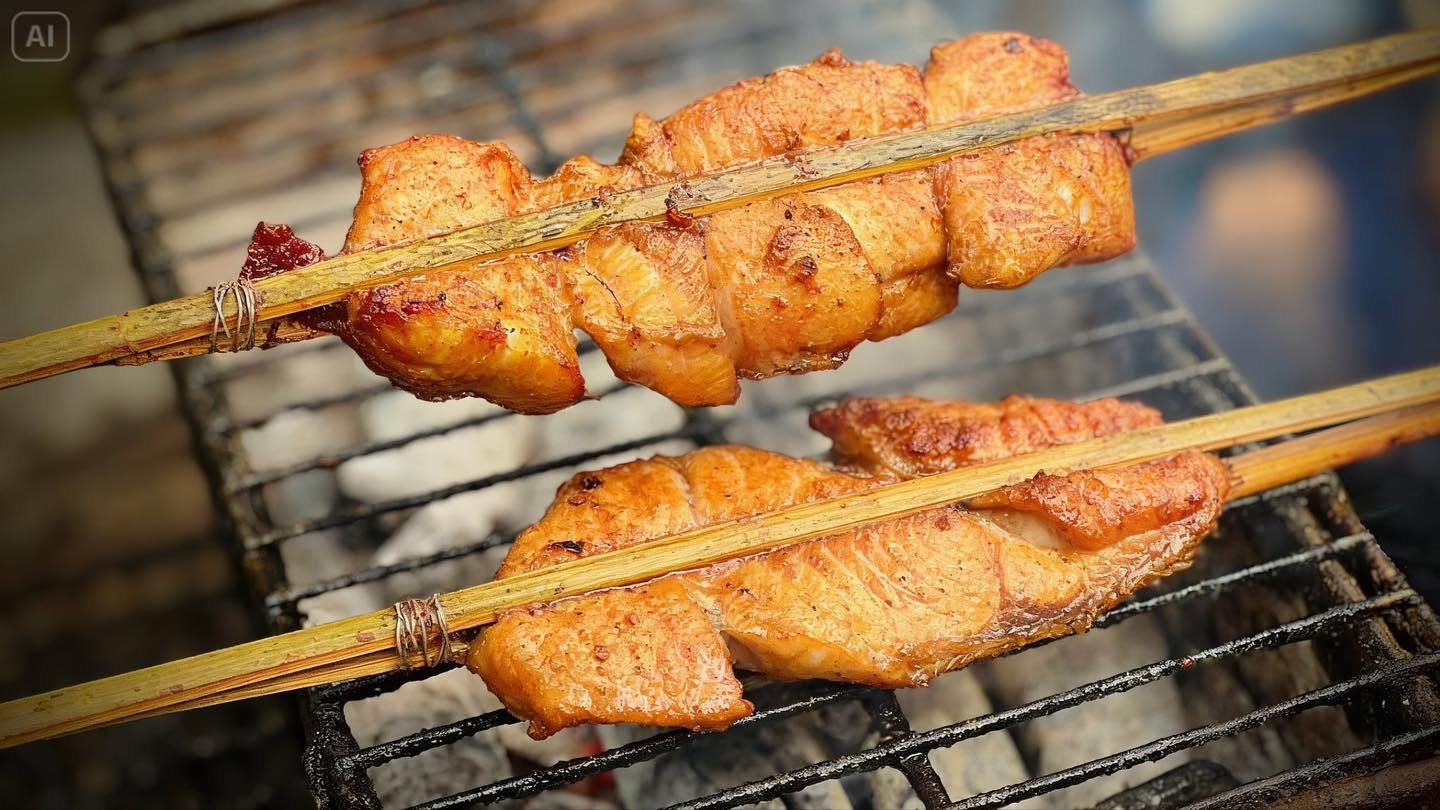
It's the combination of two rounds of heat, grilling then frying, together with a marinade recipe preserved across generations, that turns a seemingly simple dish into one that demands care at every small step.
How to eat Cha Ca La Vong the right way
For first-timers, eating this dish can feel a little different from ordinary grilled fish, since much of the experience happens right at the table rather than simply ordering and waiting for a plated dish. Here's how to get the full experience:
Watch the tableside frying: fish already grilled over charcoal is brought out and fried again on a tabletop burner, along with dill and chopped spring onion. You'll hear the oil sizzling, watch the fish turn from pale to golden, and smell dill filling the room, a part of the experience worth savoring rather than rushing past.
Prepare your own bowl before mixing: add a small amount of loose vermicelli to your bowl, then place the hot fish on top, sprinkling on crushed roasted peanuts and a little chopped fresh herbs if you like.
Mix it properly: drizzle the sweet-and-sour shrimp paste dip over the bowl and mix gently so the vermicelli, fish, peanuts, and sauce combine, taking care not to mix too roughly or the fish pieces will break apart.
Eat it hot: this is the most important point, since the fish loses its crisp exterior and dill's characteristic aroma as it cools. Many regulars take small portions at a time rather than mixing the whole pan at once, keeping the dish hot down to the last bite.
Pair with fresh herbs and condiments: a few fresh herbs on the side, like coriander or Vietnamese balm if the restaurant offers them, help balance the richness of the fish and make the meal feel lighter even after a filling portion. If you like heat, add a few slices of fresh chili to the dip.
Where to find famous Cha Ca La Vong in the Hoan Kiem Old Quarter
When it comes to Cha Ca La Vong, the original shop at 14 Cha Ca Street remains the most talked-about address. This is where the dish was born, with a rustic, timeworn space that has kept the same family style of service across generations. Simple tables and chairs with no elaborate decor make it feel more like a family eatery than a modern commercial restaurant.
It's worth being upfront: despite its fame, the restaurant holds only around 3.6 out of 5 stars on TripAdvisor. Part of the reason comes from some diners feeling the price is fairly high relative to the portion, especially compared with other cha ca restaurants in the area. That said, most reviews still praise the authentic flavor and the heritage experience that few other places can offer. If you treat it as a cultural experience rather than an ordinary meal, the price is still worth it for a first try.
If you'd like another option to compare, Cha Ca Thang Long on Duong Thanh Street is also a familiar address among Hanoi food lovers, with a more upscale space using warm wood tones and soft golden lighting. The main dish remains catfish marinated in turmeric, galangal, and fermented rice following a family recipe, grilled over charcoal to just the right doneness.
Another option worth considering is Cha Ca Lang Ngon 3B at 12 Le Van Linh Street, Hang Ma Ward, Hoan Kiem. Beyond the main cha ca dish, the restaurant also serves crispy fish innards, catfish salad, catfish porridge, and catfish hotpot, a good fit if you're dining as a group or family wanting to order beyond the traditional cha ca.
How much does Cha Ca La Vong cost?
A serving of Cha Ca La Vong at the original restaurant runs roughly 350,000 to 500,000 VND, depending on the time of visit and the size of your group. This price is considerably higher than most other street food in Hanoi, but it reflects the cost of fresh ingredients, the two-stage cooking process, and the heritage value the dish carries.
During busy hours, especially weekend evenings, the restaurant is often fully booked. If possible, call ahead to reserve a table or arrive early within opening hours to avoid a long wait.
Where to rest near the Cha Ca area after your meal
After a rich meal beside a still-sizzling pan of fish, sometimes all you need is somewhere nearby to rest without traveling far. Cha Ca Street sits within a short walk of several central Old Quarter accommodations, making it convenient to continue exploring the area the following day.
The Haron Hanoi Boutique, located at 39 Hang Trong, is a suggestion near this area, offering a private and quiet space amid the bustling Old Quarter. If you're planning to explore more of the neighborhood's food scene, Best Food in Hanoi Old Quarter can give you more options for your next meals.
See our room types at The Haron if you need a place to stay right near this area.
FAQ: Frequently Asked Questions
How old is Cha Ca La Vong? The dish dates back to 1871, created by the Doan family at 14 Hang Son Street, today's Cha Ca Street, Hoan Kiem district, Hanoi.
Why is it called Cha Ca La Vong? The name comes from a statue of La Vong, or Khuong Tu Nha, shown fishing, placed in front of the shop. Regular customers began calling the restaurant after the statue, and the name has stayed with the dish ever since.
What is Cha Ca La Vong served with? The dish is typically served with loose rice vermicelli, roasted peanuts, dill, spring onion, and a sweet-and-sour fermented shrimp paste dip.
How much does a serving of Cha Ca La Vong cost? Reference prices run roughly 350,000 to 500,000 VND per serving at the original restaurant, depending on timing and any additional dishes ordered.
Cha Ca La Vong was born in 1871 on Cha Ca Street, Hoan Kiem, carried forward by the Doan family across five generations. The right way to enjoy it is hot off the pan, mixed with vermicelli, roasted peanuts, and shrimp paste.
If you're exploring this area, The Haron (39 Hang Trong) is a nearby place to rest after your meal. Looking for a quiet place to stay near the Cha Ca area?
Reach out via hotline +84 24 3209 1666, or visit The Haron Hanoi Boutique at 39 Hang Trong, Hoan Kiem, Hanoi.