


Best Vietnamese Spring Rolls Hanoi: An Art of Flavour
In Vietnamese culinary culture, the spring roll has never been a mere snack. It is a symbol of meticulous wrapping, where the philosophy of the five elements and the balance of yin and yang are folded into every layer of wrapper and filling. Vietnamese cooks understand deeply the natural laws of balance at the table: a dish shaped by the fiery yang of frying will always find its perfect counterpart in the cooling yin of fresh herbs, vegetables, and a bright, tangy dipping sauce.
What are Vietnamese spring rolls, and why are they a culinary icon?
Vietnamese spring rolls, broadly known as "nem cuốn," are a family of dishes wrapped in a thin layer - rice paper, spring roll pastry, or even phở noodle sheets - enclosing a filling of meat, shrimp, or vegetables, either fried until golden or left fresh and uncooked. The fried version is believed to trace its roots to China's "chun juan" (春卷, spring roll), a thin pastry filled with meat or vegetables and deep-fried, brought to Vietnam by Chinese immigrant communities and gradually adapted to local taste, according to VnDoc.
Interestingly, each region of Vietnam has its own name for this dish: in the north it's called nem rán, in central Vietnam chả giò or ram cuốn, and in the south, simply chả giò. Despite the different names, the spirit remains the same - wrapping many layers of flavour and texture into one compact, satisfying bite.
Best Vietnamese Spring Rolls Hanoi: Popular Styles to Try
In Hanoi, spring rolls take on many different forms, each with its own preparation method and story.
Roll type | Wrapper | Character |
|---|---|---|
Fried nem (nem rán) | Spring roll pastry | Deep-fried, filled with pork, glass noodles, wood ear mushroom |
Shrimp and pork rolls | Rice paper | Fresh, unfried, light and refreshing |
Beef phở rolls | Phở noodle sheet | A Hanoi twist on the classic phở, filled with stir-fried beef |
Crab spring rolls | Spring roll pastry | Filled with fresh crab meat, fried to a deep golden hue |
Fried nem is the most familiar sight on any Vietnamese family table, its crisp spring roll pastry enclosing a filling of minced pork, glass noodles, and wood ear mushroom.
Shrimp and pork rolls represent a lighter, fresher path - unfried, preserving the natural sweetness of shrimp and fresh herbs within a thin, pliable sheet of rice paper.
Phở rolls, a distinctly Hanoian invention, reimagine the very soul of phở - using phở noodle sheets in place of rice paper to wrap stir-fried beef.
Meanwhile, crab spring rolls are the more indulgent variation, their rich, fresh crab filling often reserved for banquets or fine dining menus.
If you'd like to try each dish individually around the city, the phở roll stalls near West Lake or the nem stands on Hang Thung Street are among the addresses most often recommended by locals. But if you'd rather savour every variation in a single sitting, a carefully curated mixed spring roll set offers a far more complete experience.
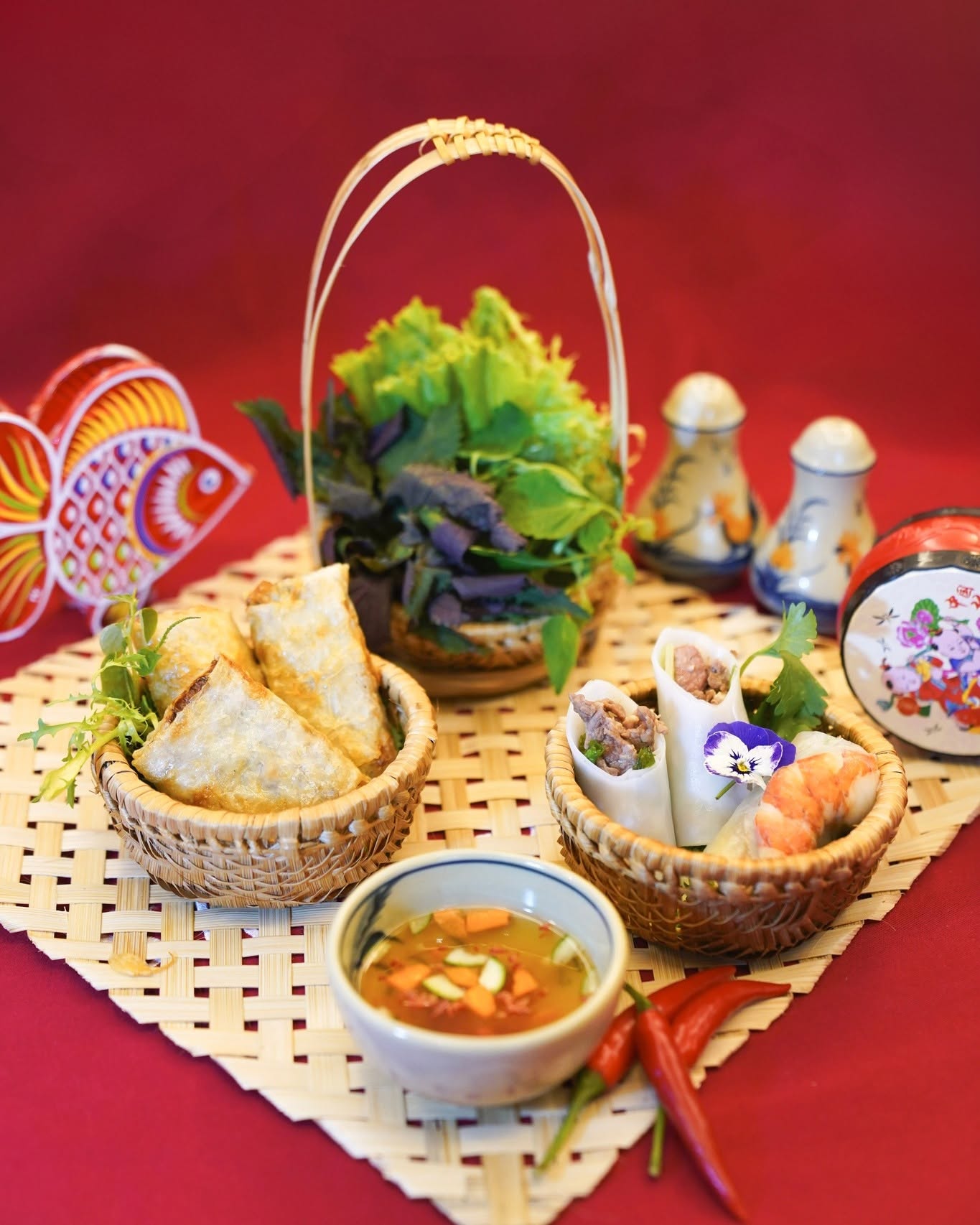
The Mixed Spring Roll Set at Sir Elly's Restaurant The Haron
At Sir Elly's Restaurant, set within The Haron Hanoi Boutique (39 Hang Trong), the Mixed Spring Roll set is curated to guide guests through this full spectrum of flavour in a single appetiser platter:
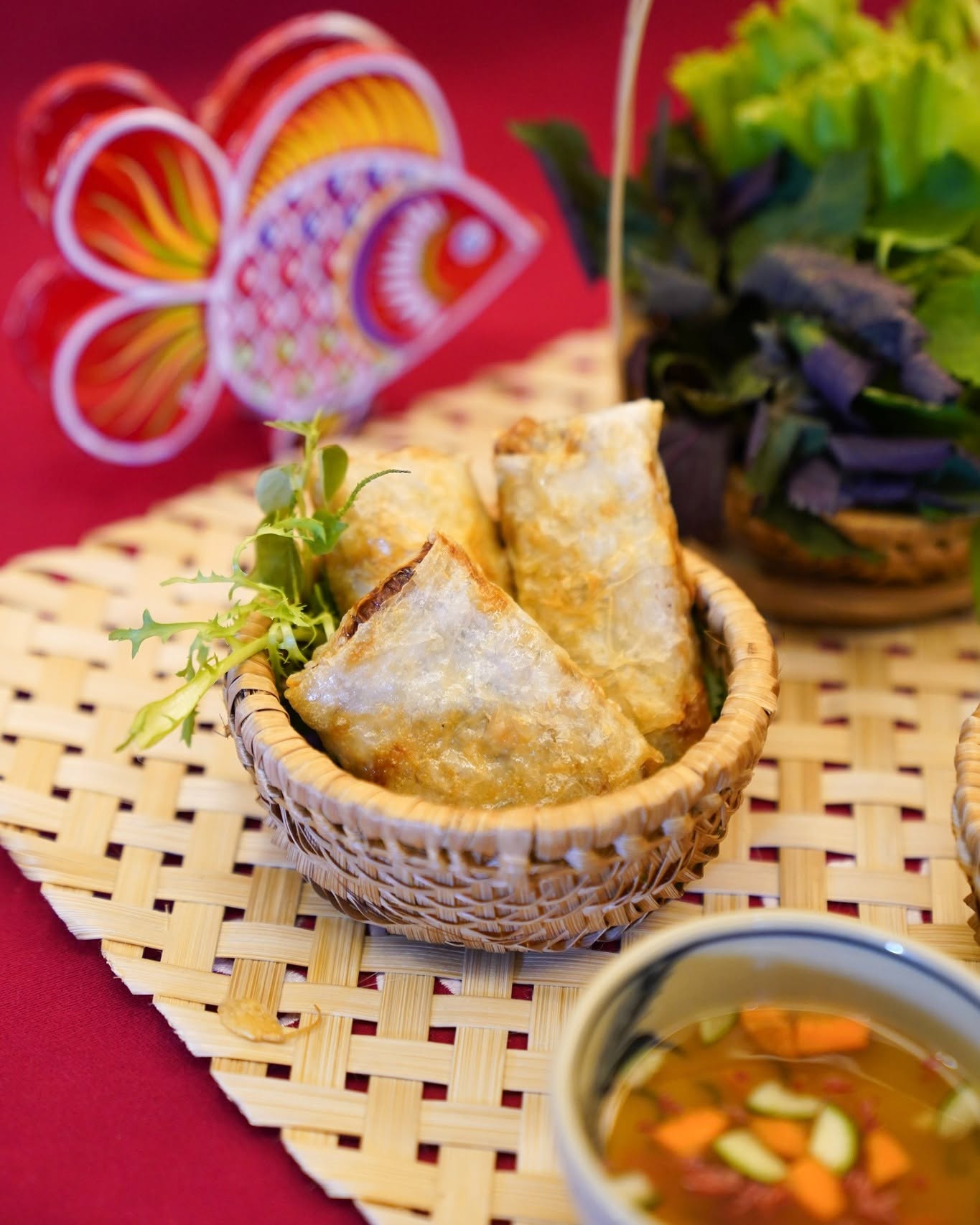
Traditional fried nem: a crisp, amber-hued spring roll pastry encasing a rich filling of minced pork, wood ear mushroom, and fragrant glass noodles.
Shrimp and pork rolls: the pure elegance of coastal cuisine, with plump, sweet fresh shrimp alongside tender slices of boiled pork, chive leaves and greens, wrapped in a thin, soft sheet of rice paper that preserves their natural sweetness.
Rich beef phở rolls: a masterful reinterpretation of the soul of Hanoi's own phở - silky white phở sheets embracing tender, high-heat stir-fried beef, fragrant with fried garlic and Vietnamese mint.
Golden crab spring rolls: the rich sweetness of fresh crab meat mingling with crisp vegetables, encased in a deep golden, crackling shell for an irresistibly savoury bite.
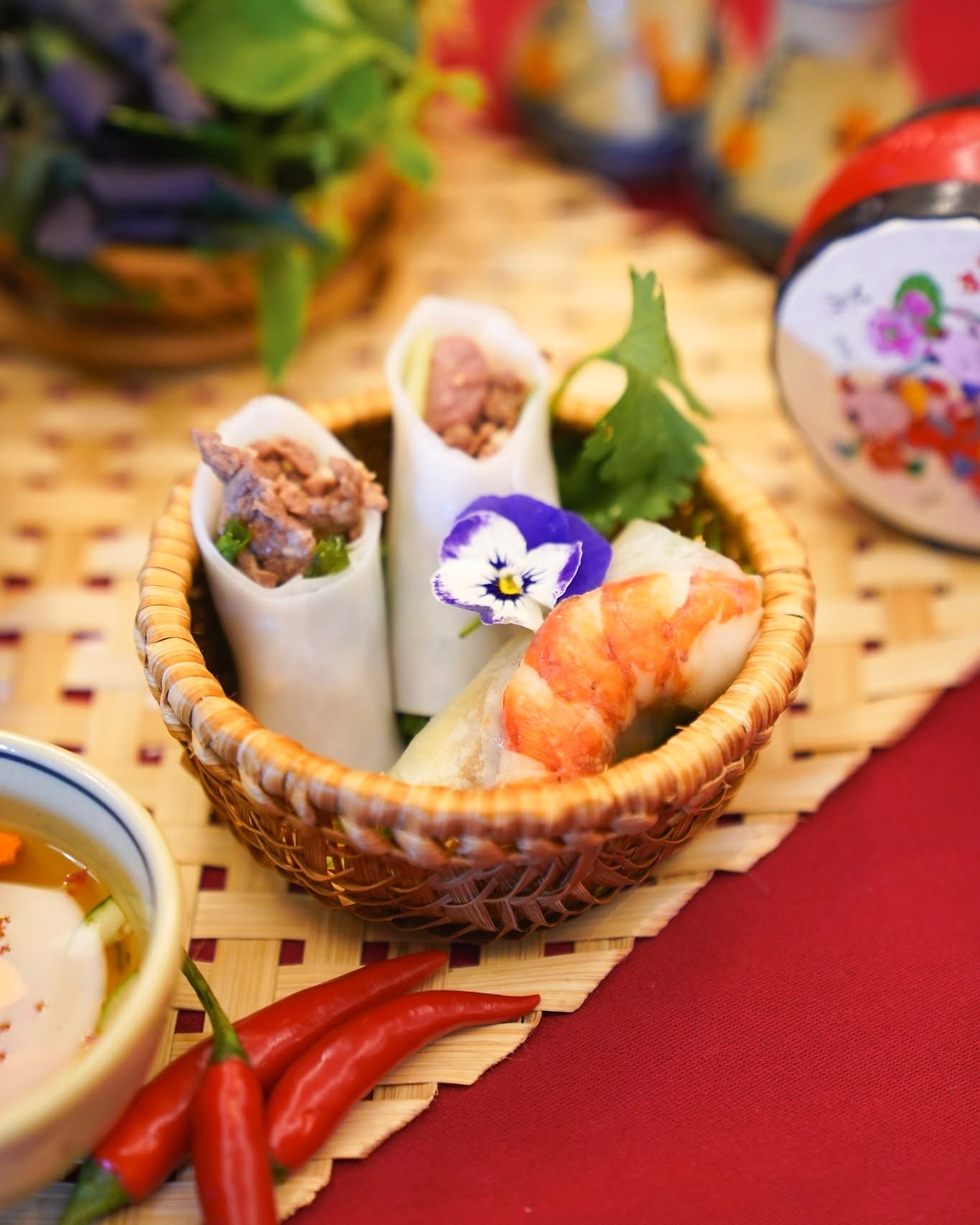
Each roll is a complete structure of flavour: soft and crisp, rich and light, warm and refreshing all at once. Dipped generously into a traditional fish sauce blend balanced between sour, spicy, salty and sweet, every sense awakens - especially on a cool autumn evening. This is the ideal appetiser to open an evening in the Old Quarter, before moving on to the mains on the Sir Elly's Restaurant menu.
If you'd like to explore more dining options in the area, our guide to the Top 10 Restaurants in Hanoi's Old Quarter covers addresses and price ranges in detail.
How to enjoy Vietnamese spring rolls the right way
To fully appreciate a mixed spring roll set, keep a few things in mind:
Eat the fried rolls while hot: fried nem and crab spring rolls are best enjoyed the moment they leave the fryer, while the pastry is still crackling.
Balance with fresh herbs: wrap in extra herbs or lettuce if available, to offset the richness of the filling - true to the yin-yang balance at the heart of Vietnamese cuisine.
Get the dipping sauce right: a well-balanced fish sauce - sour, spicy, salty, sweet - is just as important as the roll itself.
Move from light to rich: start with the fresh shrimp and pork rolls, move on to the phở rolls, and finish with the richer fried nem or crab spring rolls.
FAQ
What are the most popular types of Vietnamese spring rolls in Hanoi?
The most common are fried nem, shrimp and pork rolls, beef phở rolls, and crab spring rolls - each with its own wrapper, preparation, and flavour, ranging from crisp and savoury to light and refreshing.
How is a phở roll different from a regular spring roll?
A phở roll uses a silky white phở noodle sheet instead of rice paper or spring roll pastry to wrap stir-fried beef - a distinctly Hanoian creation that's served fresh, unfried.
What makes crab spring rolls different from regular fried nem?
Crab spring rolls use fresh crab meat in place of the usual minced pork filling, giving them a richer, sweeter flavour - often found on banquet tables or fine dining menus.
What's the best dipping sauce for Vietnamese spring rolls?
A classic, well-balanced fish sauce - sour, spicy, salty and sweet - is the ideal choice for most spring roll varieties, helping to cut through the richness of the filling.
The best Vietnamese spring rolls in Hanoi come in many forms - fried nem, shrimp and pork rolls, beef phở rolls, crab spring rolls - each carrying its own layer of flavour and texture. The Mixed Spring Roll set at Sir Elly's Restaurant (The Haron, 39 Hang Trong) brings all four variations together on one plate, balancing crisp and light, rich and refreshing.
Enjoy the fried rolls while hot, pair with fresh herbs and a well-balanced dipping sauce, to experience the true philosophy of balance behind every roll.
Visit The Haron today to experience this symphony of Vietnamese flavour for yourself
Sir Elly's Restaurant, 39 Hang Trong Street, Hoan Kiem, Hanoi.
Call +84 24 3209 1666 to reserve your table.