


Vietnamese Bamboo-Grilled Beef: A Highland Specialty
Some dishes carry an entire region within every bite. Vietnamese bamboo-grilled beef is one of them, where the naturally sweet steam released from fresh bamboo meets the gentle heat of glowing coals to cook the meat through, preserving its original sweetness without a trace of greasiness.
It's a piece of culinary wisdom passed down through generations of highland communities, now brought to the menu at The Haron for Old Quarter diners to discover.
What is Vietnamese bamboo-grilled beef, and where does it come from?
Vietnamese bamboo-grilled beef is a rustic dish that originated in the Central Highlands, tied closely to the culinary traditions of the Jrai people in Gia Lai province, where it goes by its own name, "nham đing." According to VietnamPlus, the dish's concept grew directly out of the traditional method for making "cơm lam" (bamboo-tube rice) — using bamboo, young bamboo shoots, or lồ ô as a readily available cooking material for highland communities.
Unlike grilling on a rack, the beef is marinated with distinctive highland herbs such as lemongrass, "lá é" basil, and minced garlic for about 30 minutes, then packed into a fresh, young bamboo tube — typically about the width of an adult's wrist — rinsed clean with stream water, and sealed at the opening with a pandan leaf before being set over hot coals. This method allows the meat to cook slowly in the steam and natural oils released by the bamboo itself, preserving its moisture, natural sweetness, and a distinctive aroma that's hard to replicate with any other cooking method.
Element | Character |
|---|---|
Origin | Central Highlands, tied to the Jrai people (Gia Lai) |
Alternative name | "Nham đing" (Jrai language) |
Main ingredients | Young beef, lemongrass, lá é basil, garlic, fresh bamboo tube |
Method | Marinated beef packed into bamboo, grilled over hot coals |
Signature trait | Naturally moist, lightly smoky aroma, not greasy |
Why is grilling in bamboo so special?
The secret lies in the bamboo itself. Vietnamese cooks borrow the naturally sweet steam released from fresh bamboo and the gentle heat of glowing coals to cook food through - a method that uses almost no added oil, letting the dish retain the meat's original sweetness. When the outer bamboo tube turns a scorched golden colour, that's the moment the aroma begins to spread, signalling the dish is ready.
This is also why the dish is more than just a cooking technique - it's a story of ingenuity, of highland communities turning a simple length of bamboo into a refined cooking vessel. In many Central Highland villages, this dish traditionally appears at festivals, family gatherings, or when welcoming honoured guests, as a way of expressing hospitality and respect for the natural bounty of the forest.
Bamboo-Grilled Beef at The Haron
At The Haron, this dish has been thoughtfully reimagined for the hotel's collection of Vietnamese dishes. Each piece of premium beef is infused with herbs and warming spices, then gently steamed within the bamboo tube to preserve its succulent moisture alongside a soft, smoky fragrance.
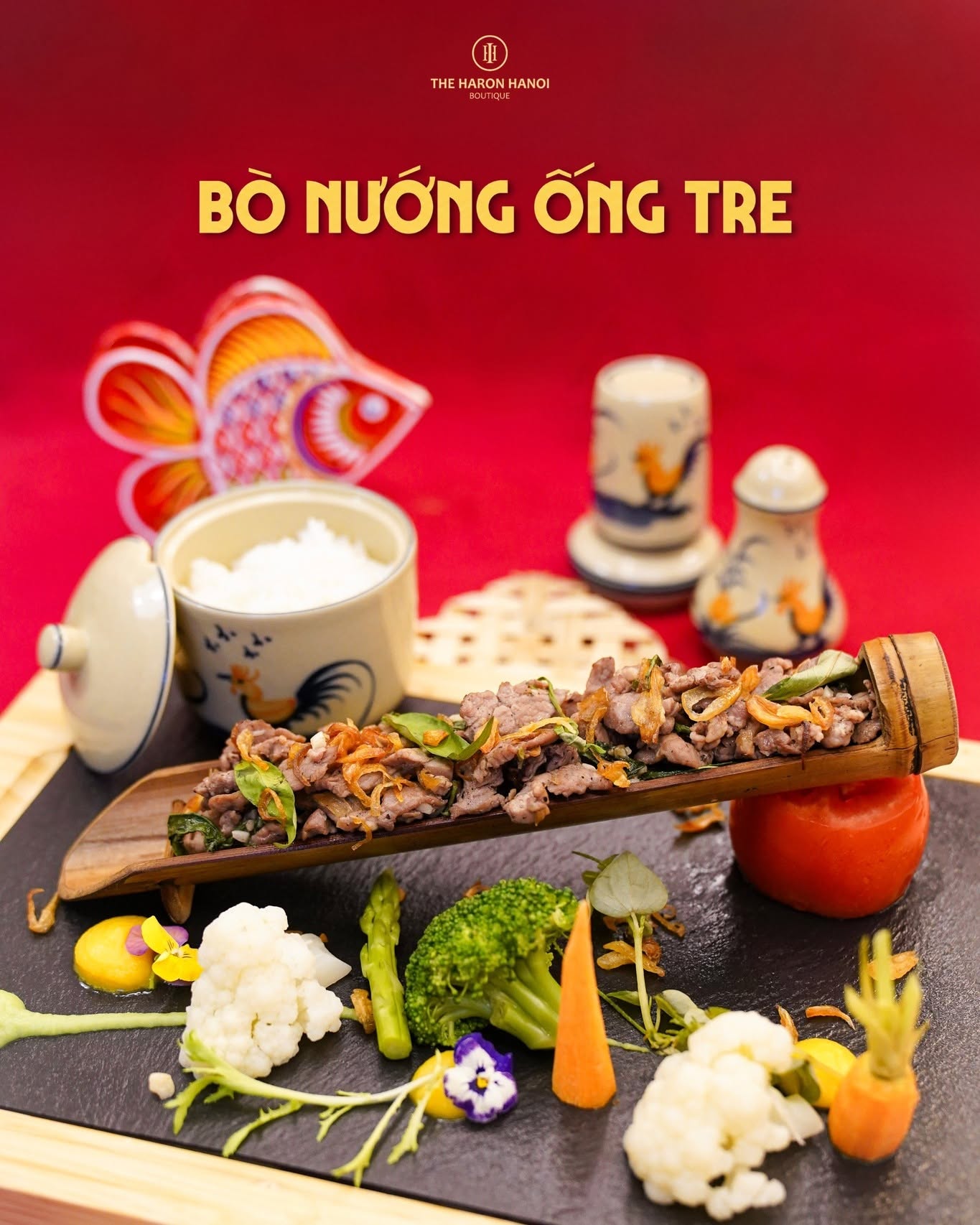
The rich flavour of the beef, fragrant with crispy fried garlic and shallots, comes together beautifully with a bowl of steaming white rice for a rustic, heart-warming combination reminiscent of a home-cooked meal. Served alongside crisp fresh vegetables, the dish achieves a beautiful harmony of colour, aroma, and flavour. Lifting the lid off the bamboo tube as fragrant steam rises, then savouring the tender, fragrant beef beside a bowl of fluffy rice on a cool Hanoi autumn afternoon — this is a complete culinary experience not to be missed. It's one of the signature dishes at Sir Elly's Restaurant, where Vietnamese cuisine is curated with care for Old Quarter diners.
How to enjoy it the traditional way
To fully appreciate this dish, keep a few things in mind:
Savour it the moment the bamboo is opened: the burst of smoky aroma and warmth as the lid comes off is part of the experience itself.
Pair it with hot steamed rice: the traditional combination that helps balance the richness of the beef.
Add crisp fresh vegetables: for both balance of flavour and a splash of colour to the plate.
Choose the right dipping sauce: depending on taste, salt with pepper and lime, green chilli salt, or a rich soy-based sauce all add an extra layer of flavour.
If you'd like to explore more Vietnamese dishes worth trying in the Old Quarter, our guide to the Top 10 Restaurants in Hanoi's Old Quarter rounds up addresses and culinary styles across the area.
FAQ
Where does this dish come from? It originates in the Central Highlands, tied to the culinary traditions of the Jrai people in Gia Lai province, where it's known as "nham đing" - inspired by the traditional method of making bamboo-tube rice.
Why does meat grilled in bamboo stay so moist? Fresh bamboo releases natural steam and oils when heated, allowing the meat to cook slowly in a moist environment rather than direct contact with flame - preserving the beef's moisture and natural sweetness.
What should it be served with? It's traditionally served with hot steamed rice and crisp fresh vegetables, paired with salt-pepper-lime, green chilli salt, or soy sauce depending on preference.
Where can I try this dish in Hanoi's Old Quarter? At The Haron Hanoi Boutique, this dish is thoughtfully reimagined on the menu at Sir Elly's Restaurant, served with steamed rice and fresh vegetables for a complete Vietnamese dining experience.
In short
This bamboo-grilled beef dish is a Central Highlands specialty tied to the Jrai people, inspired by the traditional method of cooking rice in bamboo tubes.
Grilling within bamboo preserves the meat's natural moisture, sweetness, and distinctive aroma without needing much oil.
At The Haron, the dish is thoughtfully reimagined, served with steamed rice and fresh vegetables — a warm, home-style experience in the heart of the Old Quarter.
Visit The Haron today to try this traditional dish for yourself
Sir Elly's Restaurant, 39 Hang Trong Street, Hoan Kiem, Hanoi.
Call +84 24 3209 1666 to reserve your table.